
Gravity Wells
AI concentrates wherever attention does. This week, it was Minneapolis.

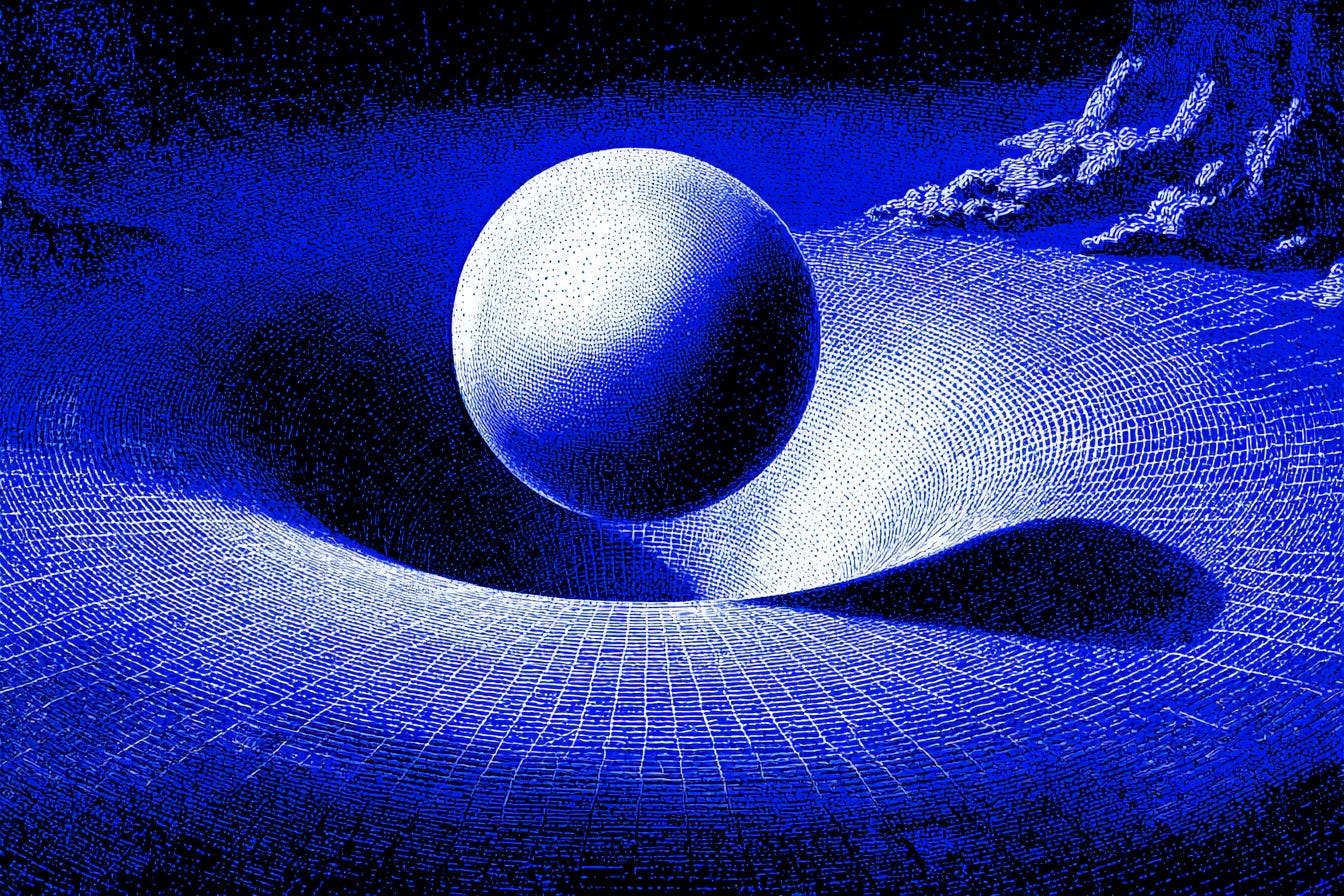
Planets warp spacetime around them. Physicists call it a gravity well. Attention works the same way. Minneapolis became the center of gravity this week, and AI-generated content warped around it instantly.
You’ve probably seen it. 'Enhanced’ still frames of the Alex Pretti shooting. Attempted ‘unmaskings’ of the officers. Fabricated photos of the man who assaulted Ilhan Omar with an unknown substance standing next to her and smiling as though they were in cahoots. Images of the same man allegedly at a BLM protest in 2020. BBC Verify tracked these manipulated images spreading in real time alongside verified footage.
It takes a lot of focus to find the few lingering tells. Nonsensical text in the background. Physics and lighting that look ever so slightly off. But nobody can scrutinize every image that closely. So, they share because it’s interesting, or it confirms what they already believe. Left, right, doesn’t matter. If the image fits the narrative, it spreads. Our only solace is X Community Notes.
What many people don’t know yet is that you can verify AI-generated images using Gemini. Google’s SynthID embeds invisible watermarks in Gemini-generated images that Gemini can detect. Gemini is also a beast at computer vision. This means it can spot wonky AI-generated text and visual anomalies in images made by other AI tools.
Perhaps the most interesting follow-on in the AI media age is the false accusation of AI manipulation. An uncanny headshot of Alex Pretti circulated where he appeared more “traditionally handsome.” Critics called it AI-generated. Probably not. It was most likely a combination of traditional Photoshop and extremely poor taste.
The Signals This Week
Six signals of the future of opinion shaping and what they mean for people inside the Beltway.
1. Yale Study Reveals How TikTok Shapes China Perceptions
Researchers document foreign influencer operations through controlled experiments
A new study from researchers at Yale and the University of Amsterdam provides the most rigorous analysis yet of how TikTok content shapes American attitudes toward China. Chinese state media doesn’t tend to break through (setting aside their very cringe but viral AI-generated music video). It’s a simple formula: Secretly pay American Influencers to share China travel content and boost American perceptions.
2. Washington Lobbyists Are Paying Online Influencers, With Few Rules
WSJ investigation reveals undisclosed financial relationships shaping policy debates
In case you missed it, The Wall Street Journal documented how Washington lobbying shops are paying social media influencers to promote policy positions without disclosure. The practice operates in a regulatory gray zone, with no consistent enforcement for influencers who don’t reveal who’s funding their policy content.
Shape the feed, shape the narrative. China knows it. American lobbyists know it as well.
3. AI Adoption in PR Hits a Plateau at 76%
Muckrack’s State of AI in PR 2026 shows adoption curve flattening
Muckrack’s annual survey of 500+ PR professionals found that generative AI adoption leveled off at 76%, barely changed from 75% last year. The rapid ‘adoption’ phase appears complete. But are people using it well? Probably not.
The report examines how workplaces are keeping pace through training and policies, whether AI adopters are integrating agents into workflows, and what data practitioners avoid feeding into AI systems.
The gap is widening between casual users and power users of AI, driven by the breakneck acceleration of underlying AI models and frameworks. Some people are using AI to write one-off emails. Others are using it to run entire outbound email campaigns on autopilot.
4. ADWEEK to Track Real-Time AI Visibility During the Super Bowl
Emberos partnership will measure which brands are winning in ChatGPT, Claude, Gemini, Perplexity, and Grok
ADWEEK is partnering with AI visibility startup Emberos to launch the first Real-Time AI Influence Index during Super Bowl 60. The index will track which Super Bowl advertisers are showing up in AI queries across five generative search engines.
Emberos will measure how often specific ads are named when people ask AI about Super Bowl commercials, whether ads gain or lose visibility as conversation changes, whether the ad appears in public discourse that feeds AI systems, and whether the AI systems accurately describe the ads.
The day after the Super Bowl, they’ll reveal which brands dominated the generative search conversation and break down why. They’ll also compare how the five AI engines performed: which saw the most queries, which had the most consistent brand recall, and where the engines disagreed.
5. YouTube Overtakes Reddit as Top AI Citation Source
LLMs now pull more from video than from forums
New data from ADWEEK shows YouTube has eclipsed Reddit as the most frequently cited social source in AI search results. YouTube appeared in 16% of LLM answers over the past six months, a reversal from Reddit’s previous dominance.
This is really important when thinking about where to place content. Reddit built its AI visibility on text-heavy threads that LLMs could easily parse. YouTube’s rise comes as models have exhausted other training data and are getting better at extracting and citing video content.
6. $PSYOPANIME and the Storytelling Gap
Fascinating real-time narrative reframing meets an Iranian propaganda failure
Today, you can watch the news in Anime. A project called $PSYOPANIME is turning real-world chaos into compelling anime clips at speed using AI. Wars, politics, crypto pumps, Davos. They transform current events into narrative content that spreads faster than any documentary. Elon Musk followed after one video racked up millions of views.
This will not be the last time we talk about $PSYOPANIME. But it was too good not to share this week’s contrast: an Iranian state-linked account tried the same approach. They posted an Anime-format video with the usual bile about protests being a CIA/Mossad conspiracy.
I watched it. I’m not the intended audience, but the Iranian version fails laughably. PSYOPANIME called it a ‘Temu Version.’ A friendly reminder: It’s not the tools! It’s the story.
The Center of Gravity Will Shift Again
Next week the center of gravity will be somewhere else. AI-generated content will concentrate there, too.
This is the repeat pattern: Attention concentrates in the gravity well, synthetic media jumps in, and people share what confirms their priors. Verification lags well behind, first from a Community Note on X and then from legacy media outlets commenting on what’s happening on social media. The cycle completes before most audiences realize their perception was warped by a ten-cent image that reached millions.
It’s a brave new world. If someone on your team should be reading this, forward it their way.
Best,
Ben